Skip to content

NEWKINDS of climate strategies: How your company can go from emissions to climate profit.

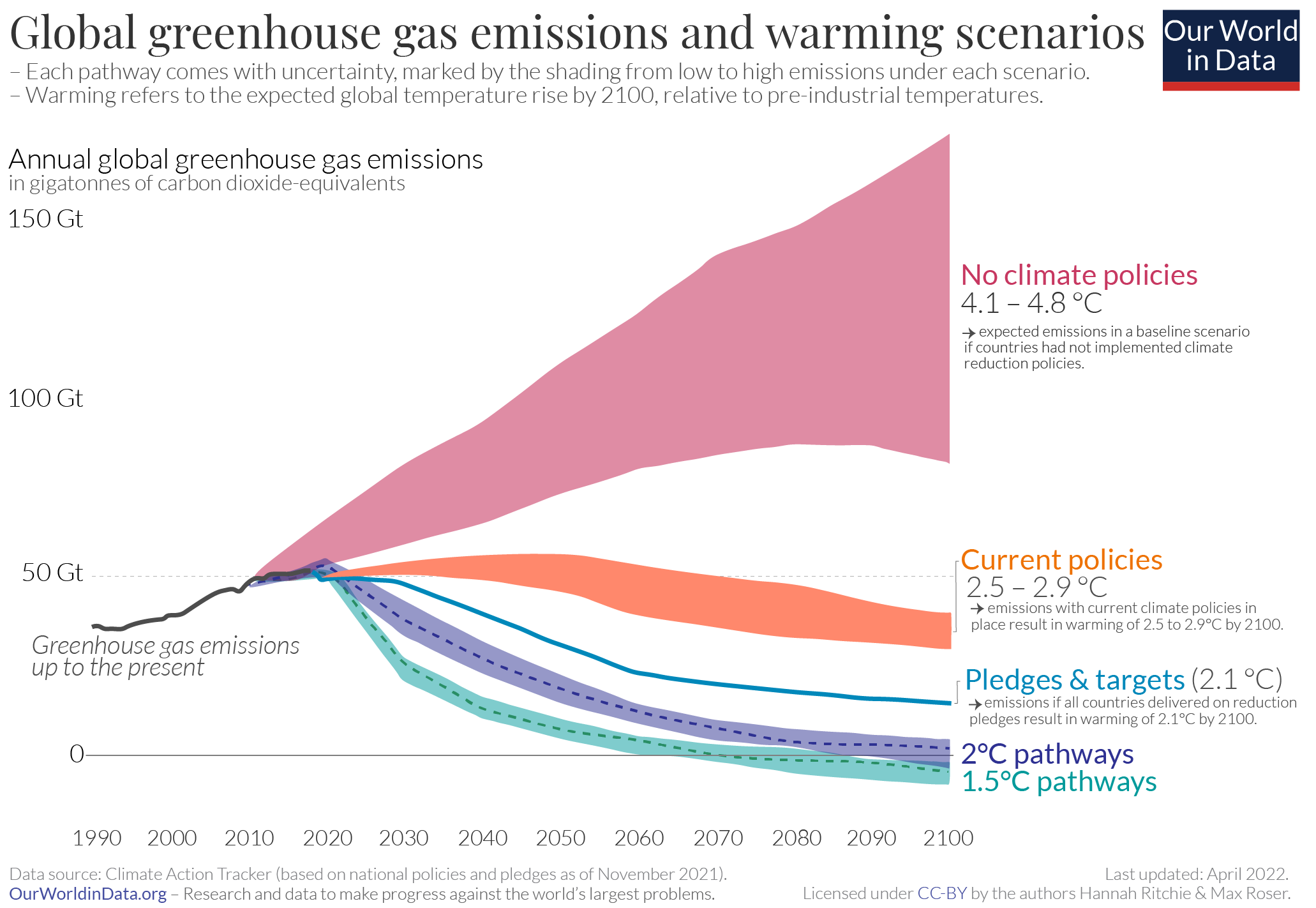
It’s clear, greenhouse gas emissions contribute to a warming planet. And let’s not sugarcoat it, this will cause a host of disastrous effects. Floods, droughts, rising sea levels and more. This threatens our society and ecosystems on a global scale. The more emissions, the more warming, the more dangerous the future.

We could be turning the tide

Not long ago, we were heading down a path that could have undone modern civilization. The good news? Our collective action has already helped prevent the worst. But our work isn’t done yet. To ensure a safe and thriving world for our children, and grandchildren, we must keep global warming well below 2°C, just as we committed to in the Paris Agreement.

Source

Be part of the turnaround

Beyond compliance, any long term business model needs a thriving society and economy. So protecting them isn’t just the right thing to do, it’s smart business. These are reasons as a business to take emissions into account.

Many companies worry about the costs of acting quickly on climate and reducing emissions. They fear that moving fast could put them at a competitive disadvantage. The good news is that this is no longer the case. Advances in technology, innovation, and regulation now make it possible to cut emissions and gain a strategic advantage. What once felt like a risky trade-off has become an opportunity. The climate transition isn’t the world’s most complex prisoner’s dilemma anymore. The tools are available, the know-how exists. All that’s needed is a clear strategy and the decision to act.

Measure what matters

If you want to reduce emissions, this is where to start.

Finding out where your emission hotspots are, is a good first step. That means calculating where and how much emissions are part of your company’s activities. This helps you identify what parts of your value chain are the main contributors. Emissions are divided into three distinct scopes.

  • Your scope 1: You start looking at your companies’ own direct emissions, caused by company cars for instance.
  • Your scope 2: But we also have to look at our indirect emissions, from electricity and heat.
  • Your scope 3: the main contributor: The emissions in the upstream and downstream activities of the organization. That includes the logistics, material sourcing, and much more.

For most companies scope 3 is by far the biggest. It forces you to take an integral look at emissions throughout your value chain. By addressing scope 3, you don’t just dodge emissions issues by shifting responsibility to consumers or suppliers.

Setting Targets and strategizing

With a bit of insight (possibly with our support) you can discover where your actions will have the greatest leverage. By combining this with an understanding of where your emissions are concentrated, you’ll know exactly where to focus. You’ll be able to identify quick wins, long-term challenges, and opportunities to collaborate with your partners.

Quick win? Change your energy contract to green electricity, no costs – major benefits.

Frameworks and certifications

Of course it is important that targets are in line with the Paris Agreement and supported by science. Or maybe you even want some third party verification as well. You know, to flaunt that little logo on your website, that tells your partners your company is future proof.

That is where framework and certification come into play. Some we like:

  • SBTi: Sets science-based CO₂ targets aligned with the Paris Agreement.
  • CDP: Reports and benchmarks company climate and energy impact.
  • CO2 Performance Ladder: Dutch certification rewarding active CO₂ reduction.

These acknowledgements of your efforts will look beautiful on your product and website. But don’t forget to feature it while communicating to partners, clients and consumers. So they (and you!) know you are on track with your climate goals.

There is more: Adapting to changing climate

A climate strategy goes beyond simply reducing emissions. There is also the need to anticipate and design for the impacts of climate change. Shifting weather patterns can affect trade routes or create new opportunities, such as sourcing closer to home. Assessing what the future will bring, and adapting to this climate change will make your company’s strategy more resilient and better prepared for whatever the changing climate may bring.

My experiences with carbon strategies

I’ve been helping dozens of companies with their carbon strategies. It is interesting to see how often they hesitate to change. For instance, some retail companies didn’t like to switch to all electric vehicles with their logistical partners. Something about cost and range. But once you get into it, they find that going electric benefits all parties. More comfort for drivers, cheaper rides, better TCO on trucks, no relevant range limitations – AND it saves a lot of emissions.

This is one example, but there are many more progressive clean steps that cut emissions and can benefit you!

So what can you do now?

Excited to start? Awesome, here are some options;

  1. Again, switch to green electricity, call your facilities manager, and tell her to switch.
  2. Or better yet, call your biggest 3 suppliers, ask them about their emissions insights and challenges, and ask how you can collaborate. No doubt there are some benefits to be gained.
  3. And get started measuring those CO2s bubbling up from your company.


NEED SOME HELP?

You know where to find us!

What’s your story?

Let’s get in touch!